Insights · AI and digital HSE
Digital HSE: Critical Control Verification That Holds
How live verification turns critical controls from a static register into practical, timely assurance for energy projects.

A critical-control register can look complete while the control itself is weak in the field. The real question is not whether a barrier was listed in a workshop; it is whether the people doing the work can confirm its condition, understand its limits and act when it has degraded.
Digital HSE should make that question easier to answer. It gives a project one current place to see what has been verified, what is due and what needs attention. Used well, it supports a conversation at the workfront rather than moving assurance further away from it.
Start with the major accident events
The best digital verification systems do not try to measure everything. They begin with the major accident events relevant to the operation and the barriers that prevent or mitigate them. Bowtie analysis is useful here because it makes the path from threat to consequence visible and identifies the controls that cannot be allowed to fail.
For each critical control, define the expected performance standard in practical terms. A lifting control may require equipment certification, competent people, an exclusion zone and line-of-fire management. An isolation control may require a clear boundary, current drawings, physical verification and a defined response when the plant condition changes.
This turns an abstract control into an observable condition. It also makes the verification question specific enough to be answered honestly in the field.
Capture evidence that supports a decision
A tick alone is weak evidence. The useful record links the verification to the work: who checked it, when it was checked, what was observed, and what action is required if the standard is not met. Depending on the control, the record may include a photograph, a current certificate, a permit reference or a short note explaining a changed condition.
The aim is not to create a digital paper trail for its own sake. It is to give supervisors and leaders enough context to decide whether work can safely continue, whether a control needs restoring, or whether the task should stop.
Evidence also needs an owner. When an item is marked due or overdue, the system should make the responsible role and escalation path visible. A register without clear accountability simply moves the spreadsheet into a different interface.
Make status visible at the right level
A project dashboard should simplify the picture without hiding the detail. Crews need the status of the controls that affect today’s task. Supervisors need to see emerging gaps across their shift or area. Project leaders need a clear view of recurring overdue checks, trends by contractor and issues that require resources or a decision.
This is where live status matters. A monthly report may describe a control that was sound four weeks ago, but it cannot confirm the condition today. A well-designed digital HSE workflow distinguishes verified, due and overdue work so the discussion is focused on the current risk.
The system should also preserve the ability to investigate. If a control repeatedly appears overdue, the team needs to see whether the cause is inadequate access, unclear ownership, an unrealistic verification frequency or a broader problem with how the work is planned.
Keep the workflow close to the field
Digital assurance fails when it adds steps that crews cannot complete during normal work. The workflow needs to work on the device available, use plain language, and ask only for evidence that is meaningful for the control. Where an issue is found, the follow-up should be as simple as assigning an action, naming an owner and confirming close-out.
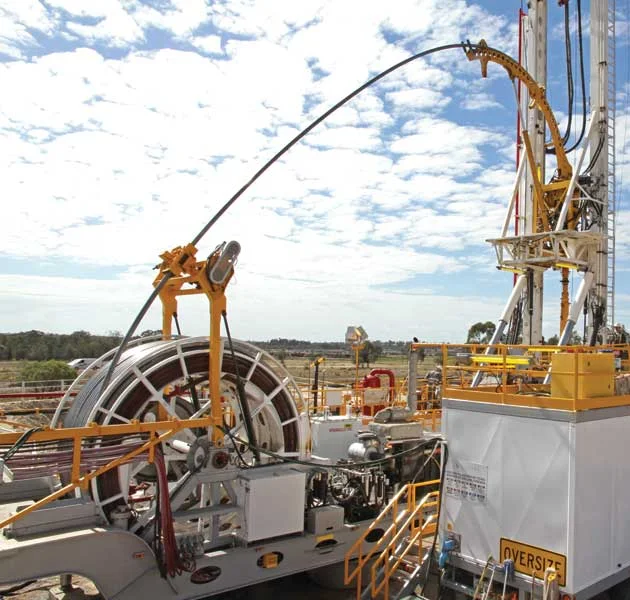
ROC Advice’s Drilling Campaign — Queensland case study demonstrates the value of practical design. The campaign simplified field documentation and lifted critical-control verification compliance from 60% to 95%. The lesson is not that every project needs the same form; it is that a system earns engagement when it helps the crew understand and control the work.
A digital system is an assurance tool, not the control
No dashboard can substitute for competent supervision, a functioning physical barrier or the authority to stop work. Digital HSE is most useful when it makes the actual condition of those controls visible early enough for people to respond.
That is the standard to hold a platform against: does it help the project recognise a weakening barrier, direct action to the right person and verify that the issue has been resolved? If it does, the technology is supporting operational discipline rather than simply recording it.
ROC Advice’s Digital HSE work turns bowtie barriers into short field checks crews can use on shift, with every verification recorded by the person who made it. For integrated field support, explore Embedded HSE support.